
Babywearing: Benefits, Safety, and Finding the Right Carrier
Babywearing can offer closeness, comfort, and a free pair of hands. Learn the benefits, how to babywear safely, and what to consider when choosing a carrier.
BirthX Team · · 11 min read
Download summary (PDF)
Despite what an aisle full of very expensive baby gear might have you believe, babywearing isn't new. It is an ancient postpartum tradition practiced across cultures and continents for thousands of years. As carrier mammals, humans are biologically adapted to carry their babies close, and families around the world have developed their own ways of doing just that. From vibrant East African kangas and Japanese onbuhimo carriers to Indigenous cradleboards made from wood or natural fibers and rebozos used in Mexico and Guatemala, babywearing reflects the rich traditions and everyday needs of communities around the world. These carriers have allowed parents and caregivers to keep their babies close while working, traveling, and caring for their families. While the materials and designs vary, the purpose remains much the same: keeping babies close, supported, and connected to the people who care for them.
Although babywearing has been practiced for generations around the world, it wasn't until the second half of the 20th century that it began gaining renewed popularity in Western countries. In the 1960s, American nurse Ann Moore returned from Peace Corps service in West Africa inspired by the way mothers there carried their babies, and went on to help create the Snugli, one of the first widely sold soft carriers in the United States. Later, as interest in bonding and responsive caregiving grew, pediatrician Dr. William Sears and his wife Martha helped popularize the term "babywearing" itself. Today’s carriers draw on traditions from around the world, including half-buckle carriers inspired by the Chinese meh dai and ring slings adapted from traditional cloth slings.
What Are the Benefits of Babywearing?
Babywearing offers more than a convenient way to carry your baby. Keeping your baby close provides opportunities for bonding, comfort, and connection while allowing you to move through your day. From soothing a fussy newborn to making breastfeeding more accessible, babywearing can support both babies and their caregivers during the postpartum period and beyond.
Reduces Crying and Helps Your Baby Settle
Babies are born with an instinctive need for closeness. The warmth of your body, the sound of your heartbeat, and the gentle movement of being carried can help your baby feel safe and secure, recreating some of the familiar sensations they experienced in the womb. Being held upright may also help ease discomfort from trapped air, making it easier for your baby to settle. Research suggests that carrying babies more frequently can reduce crying and fussing, particularly during the early months of life.
Supports Brain Development and Cognitive Growth
Your baby's brain develops rapidly during the first few years of life, and babywearing gives your baby a front-row seat to the world while keeping them close to someone they trust. As you move through your day, your baby can hear your voice, observe facial expressions, and experience the sights and sounds around them. Talking to your baby, responding to their cues, and sharing everyday experiences provide opportunities for language learning, social interaction, and cognitive development.
Supports Breastfeeding
Breastfeeding is a learning experience for both you and your baby, and having your baby close can make it easier to recognize their early hunger cues. It also encourages skin-to-skin contact, which promotes milk production and helps regulate your baby's temperature, heart rate and breathing rate. For parents who are comfortable and experienced with their carriers, it may offer additional flexibility by providing a hands-free latch or increased ease when feeding outside the home.
If you choose to breastfeed while babywearing, your baby's airway must remain clear. After feeding, return your baby to an upright position with their face visible and their chin off their chest.
Supports Maternal Mental Health
Between recovering from birth, caring for a newborn, and adjusting to a new routine, even everyday tasks can feel overwhelming. Babywearing can offer a way to meet your baby's need for closeness while giving you greater freedom to move around, take a walk, or spend time with family and friends. For some mothers, having their baby comfortably settled in a carrier can help reduce feelings of stress and make daily activities feel more manageable. Research suggests that babywearing may help protect against postpartum mood disorders (PPMDs) by encouraging the release of oxytocin, a hormone associated with bonding and emotional well-being, during the transition to parenthood.
Supports Your Baby's Gross Motor Development
Babywearing gives your baby opportunities to strengthen their head, neck, and core muscles as they respond to your movements and explore the world from an upright position. For babies who aren't yet mobile, time spent in a carrier also provides a break from lying on their backs, which may help reduce the risk of developing flat spots on their heads. A carrier that supports your baby's hips in a natural, spread-squat or "M" position can offer additional benefits by promoting healthy hip development, particularly during the early months of life. Together, these benefits make babywearing a simple way to support your baby’s physical development while keeping them close as they grow and explore the world.
What Kind of Baby Carrier Should You Choose?
With so many baby carriers available, finding the right one can feel overwhelming. Wraps, ring slings, buckle carriers, and meh dais come in a variety of styles and materials, each offering different benefits depending on your baby's age and your family's needs. Think of it like finding the right pair of shoes: the best choice isn't necessarily the most popular or expensive, but the one that fits comfortably and supports you throughout your day. Consider how often you plan to babywear, what activities you'll be doing, whether you'll be sharing the carrier with another caregiver, and your budget. Some families find one carrier that works for everything, while others prefer different styles as their baby grows and their needs change.
The good news? There's no universally perfect carrier, and you don't need the most expensive one to enjoy the benefits of babywearing. What matters most is finding one that fits your body, supports your baby safely, and feels comfortable enough that you'll actually want to use it. Here's a closer look at the most common types of carriers to help you explore your options.
Stretchy Wraps
Best for: Newborns and young infants
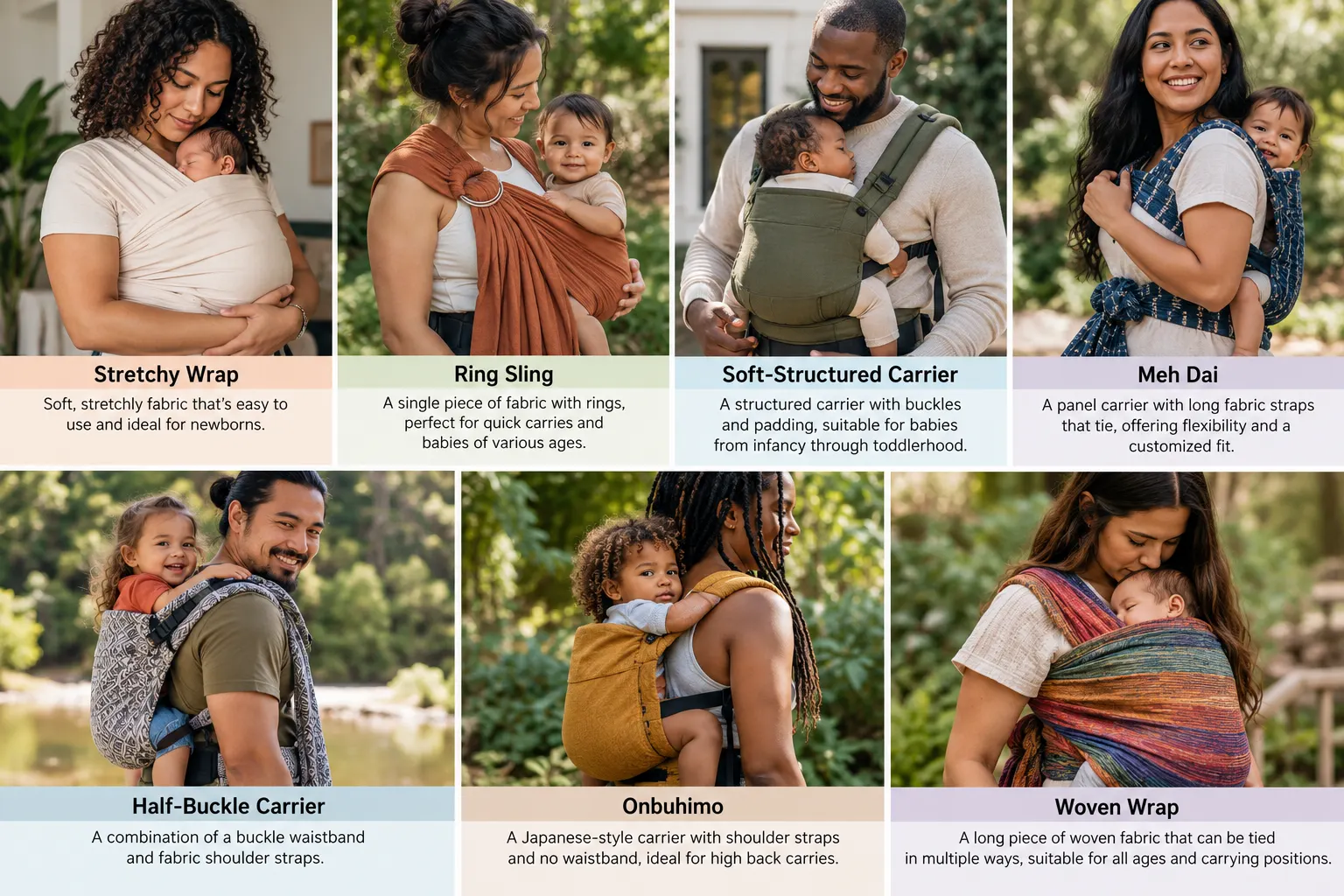
Soft cotton jersey, bamboo blends, or cotton with spandex. These long, stretchy wraps mold to your body and create a snug fit for your baby. They are especially popular in the early months, though they can feel less supportive as your baby grows. Learning to wrap and tighten them safely takes practice.
Common brands: Boba, Solly Baby, Moby, Ergobaby Aura
Ring Slings
Best for: Newborns through toddlerhood
A length of fabric threaded through two sturdy rings, usually made from linen, cotton, silk, or woven fabric blends. Compact and easy to adjust with practice, ring slings are useful for quick pickups and older babies who want to be carried on and off. Most of the weight rests on one shoulder.
Common brands: WildBird, Hope&Plum, Sakura Bloom, LennyLamb
Soft-Structured Carriers
Best for: Infancy through toddlerhood
These carriers have a fabric panel, adjustable shoulder straps, buckles, and usually a supportive waistband. Common fabrics include cotton, linen, and breathable polyester mesh. They are practical for walks, travel, and sharing between caregivers. Some fit newborns; others have minimum size requirements or need an infant insert.
Common brands: Happy Baby, Ergobaby, Tula, LÍLLÉbaby, WildBird, Artipoppe
Meh Dais
Best for: Infancy through toddlerhood
Traditional Chinese carriers, meh dais (also known as meh tais) combine a supportive fabric panel with long shoulder and waist straps that tie around the caregiver. They are commonly made from cotton canvas, linen, or woven wrap fabric. Their adjustable fit works for a range of body sizes, and can be used for front and back carries.
Common brands: Didymos, LennyLamb, Fidella, Hope&Plum
Half-Buckle Carriers
Best for: Infancy through toddlerhood
A half-buckle combines a buckle-fastened waistband with long fabric shoulder straps that wrap and tie. Often made from cotton, linen, or woven wrap fabric, it offers the convenience of a buckle with the personalized fit of a wrap. Wide shoulder straps can help spread your baby's weight during longer carries.
Common brands: Didymos, LennyLamb, Girasol, Fidella
Onbuhimos
Best for: Usually older babies and toddlers
These Japanese-style carriers feature shoulder straps without a waistband. Modern versions are often made from cotton canvas, linen, or woven wrap fabric, with padded straps and adjustable buckles for added comfort. They're especially popular for high back carries. Most models are designed for babies who can sit independently, although some are suitable for younger babies and allow front carrying. For caregivers who prefer to avoid pressure around their waist or abdomen, including those recovering from a C-section, this can be an excellent option. Always check the manufacturer’s guidelines to ensure the carrier is appropriate for your baby’s age and developmental stage.
Common brands: Sakura Bloom, LennyLamb, Happy Baby, Naked Panda
Woven Wraps
Best for: Newborns through toddlerhood
Long pieces of non-stretch fabric tied in different ways for front, hip, or back carries. They may be woven from cotton, linen, hemp, silk, wool, or blends. Different lengths and fabric weights allow a highly customized fit from newbornhood onward, although woven wraps have a bigger learning curve.
Common brands: Didymos, Oscha, Girasol, LennyLamb, Little Frog
Every baby, parent, and body is different, so the carrier that works beautifully for one family may feel awkward for another. Whenever possible, try a few styles before you buy. A babywearing consultant, carrier lending library, local parent group, or a friend with a collection can give you a chance to test the fit and feel firsthand. Before using a new carrier, take a few minutes to read the manufacturer's instructions. Check the recommended age, weight range, developmental requirements, and approved carrying positions. Regularly inspect the fabric, seams, buckles, rings, and straps for signs of wear or damage.
How to Babywear Safely
Whether you're using a wrap, ring sling, or structured carrier, your baby should feel snug and supported while being able to breathe freely. One easy way to remember the basics of safe babywearing is the T.I.C.K.S. acronym.
T — Tight
Your carrier should hold your baby snugly against your body without restricting their breathing. Loose fabric can allow your baby to slump into a position that makes breathing difficult.
I — In View at All Times
You should always be able to see your baby's face without moving fabric out of the way. Keep their nose and mouth uncovered and make sure their face isn't pressed against your body.
C — Close Enough to Kiss
Position your baby high enough on your chest that you can comfortably kiss the top of their head simply by tilting your head forward.
K — Keep Chin Off Chest
Your baby's chin should never be pressed tightly against their chest, as this can restrict their airway. Make sure there's enough space beneath their chin to keep their breathing unobstructed.
S — Supported Back
Your baby's back should be comfortably supported in its natural position, with their tummy and chest resting against you. The carrier should prevent them from slumping or curling forward.
If your baby was born prematurely or has low muscle tone, breathing difficulties, hip dysplasia, or another condition that may affect positioning, speak with their healthcare professional before babywearing. A qualified babywearing consultant can also help you find a carrier and carrying position that meet your family's needs.
Support Healthy Hip Development
Along with remember T.I.C.K.S., it's important to support their developing hips. The International Hip Dysplasia Institute recommends carrying babies with their hips naturally bent and spread apart, with their thighs supported. This is commonly called the M-position or spread-squat position.
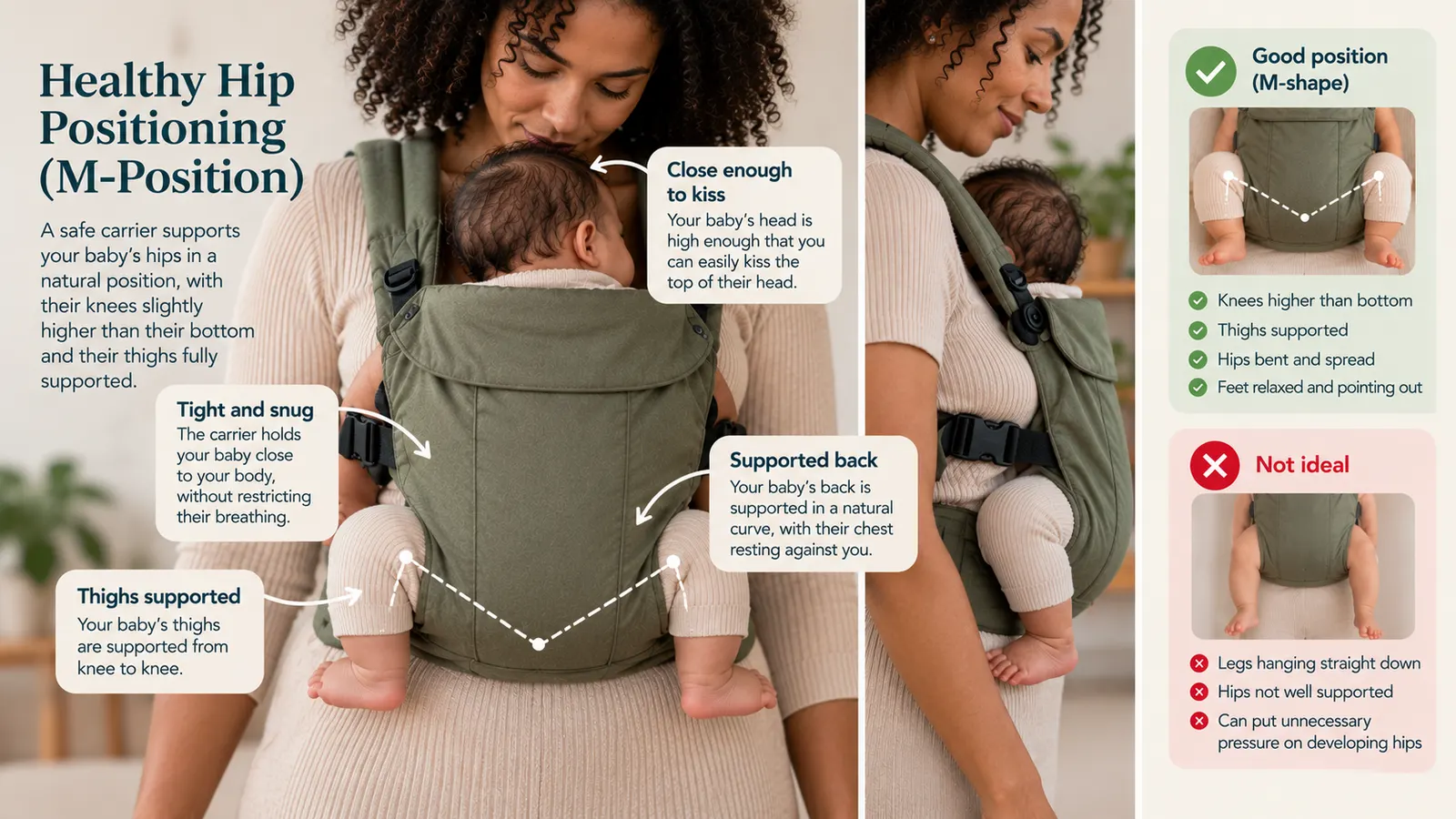
This positioning is particularly important during the first six months, when your baby's hips are developing rapidly. Look for a carrier that supports your baby's thighs toward their knees without forcing their legs together or holding them straight.
Remember, learning to use a carrier takes practice. Take your time getting comfortable with it, check your baby's position regularly, and ask for help if something doesn't feel right.
Front Carrying
Front carrying is a popular way to keep your baby close. However, facing inward, toward your chest, is generally recommended for newborns and young infants, as it supports their natural curled position and allows you to monitor their breathing and respond to their cues. As your baby develops strong head and neck control, some carriers also allow outward-facing positions. If you choose to carry your baby facing outward, make sure your carrier is designed for it, your baby meets the manufacturer's developmental requirements, and their hips, back, and airway remain properly supported. Outward-facing carries are best kept brief, particularly if your baby becomes overstimulated or tired. If your baby falls asleep, reposition them facing inward with their face visible and airway clear.
Babywearing Doesn't Have to Be All or Nothing
Like so many aspects of parenting, babywearing is about finding what works for you and your family. You might love carrying your newborn in a stretchy wrap but find yourself reaching for a structured carrier as they grow. Your partner might prefer a completely different style, or your toddler might suddenly decide they'd rather walk everywhere. Your needs and preferences will change, and that's perfectly normal.
Babywearing isn't a parenting requirement. It's simply another way to comfort your baby, respond to their needs, and keep them close while going about your day. Some days, a carrier might make all the difference. Other days, you might not use it at all.
If a carrier isn't working for you, try adjusting the fit, exploring another style, or getting help from a babywearing consultant. The goal isn't to become a babywearing expert. It's to find what works for your baby, your body, and your family.
Sources
- Hunziker & Barr (1986), Increased Carrying Reduces Infant Crying
- Little et al. (2021), Infant Carrier Intervention and Breastfeeding
- Little et al. (2023), Infant Carriers and Postpartum Depressive Symptoms
- U.S. Consumer Product Safety Commission, Infant Sling Carrier Safety
- International Hip Dysplasia Institute, Baby Carriers and Other Equipment
- International Hip Dysplasia Institute, Babywearing
Want to save or share this?
Get a one-page summary to print or bring to your next appointment.